
Serana OpsAgent
Ask your fleet anything.
OpsAgent is an AI planning engine for satellite operators. Feasibility, capacity, and continuity plans in minutes, each backed by the link budget, the binding constraint, and a patent-pending explanation of why the chosen option won.
Routine planning decisions queue behind scarce engineering expertise
Sales feasibility, capacity changes, and outage re-planning all depend on the same few senior engineers. Dashboards show network state; they do not produce an executable, auditable plan.
What OpsAgent covers
Win capacity
Instant feasibility and link analysis for any site, terminal, and availability target. Loading and headroom for current and forecast demand.
Protect continuity
Multi-tier continuity plans across GEO, MEO and LEO. Failure impact and reallocation in minutes.
Explain every decision
Options considered, why the winner won, why each alternative lost. Customer-ready reports and fully replayable sessions.
Ask it like you'd ask your best engineer
Can we serve a 40 Mbps site in Cúcuta, and on which beam? What's the minimum antenna size to close 20 Mbps at 99.7%? Can we take three new customers on gBird-17 at once? What rate does a 60 cm maritime terminal get on the next MEO pass?
Yes, the link closes. gBird-17 beam NS37 delivers 25 Mbps at Cúcuta with 0.3 dB margin at 99.5% availability.
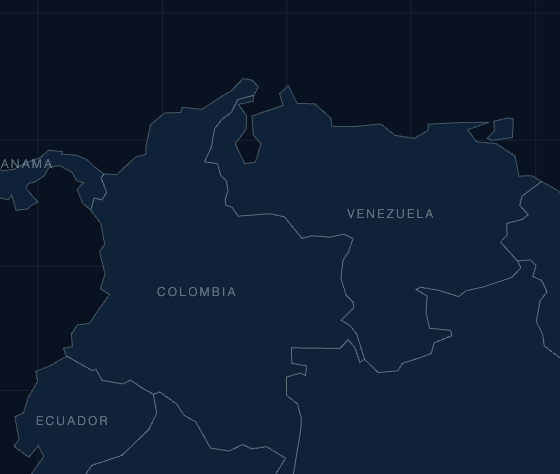
Feasibility for a 25 Mbps site, answered in one question with full link details behind every number.
Two of three close as requested. Recife is constrained by pool bandwidth at 45 Mbps; all three succeed if Recife takes 30 Mbps.
Recommendation: accept Bogotá and Port of Spain now; offer Recife 30 Mbps.
The 45 Mbps carrier needs 22 MHz; the serving pool has 14 MHz contiguous free. Bandwidth binds before power. At 30 Mbps the carrier fits with 2 MHz to spare.
Three service requests solved jointly against pool bandwidth and power, with the binding constraint shown.
Computed and explained
Every answer is grounded in real engineering computation, and when there's a decision to make, Serana solves it and shows its work.
Verifiable
Your engineers can verify any answer. Your commercial team can forward it to a customer.
Replayable
Every planning session is fully replayable for audit.
Explained
Options considered, why the winner won, and why each alternative lost — a patent-pending explanation, not a black box.
Fits the systems you have
OpsAgent reads from your existing systems: NMS state, carrier plans, telemetry feeds. Every answer accounts for live conditions and forecasts — weather, traffic demand, and interference. Nothing about your operational workflow changes. Your team simply stops being the bottleneck for questions the data can already answer.
Deployment
Serana runs on your terms — wherever your data and your assurance requirements say it must.
Cloud, on-prem, or air-gapped
Runs wherever your data is allowed to live.
Sovereign enclave
A dedicated deployment inside your jurisdiction.
Fully auditable
Every session logged and replayable end to end.
Audit & assurance
Supports your existing audit and assurance workflows.
Pilot OpsAgent on your fleet data
A pilot needs a fleet data export; you have a working planning assistant over your actual network within weeks.
info@serana.ai